Project
External decoration and restoration of the grade I listed building
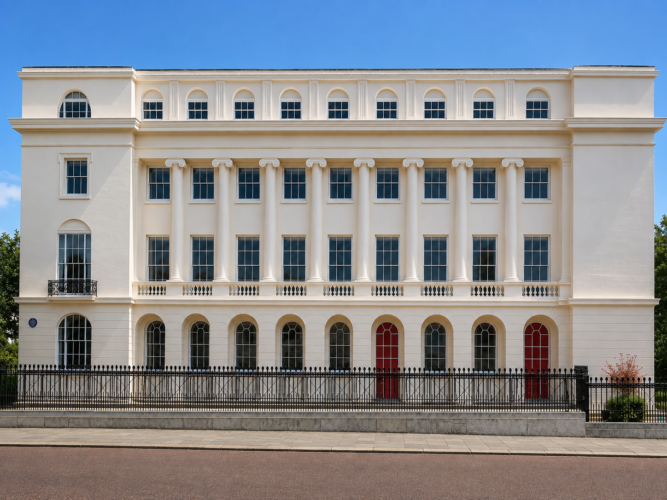
We’ve recently completed the latest programme of external redecoration and restoration works at the Royal Academy of Music’s historic 1–5 York Gate building in Regent’s Park, continuing a relationship with the property that stretches back more than 35 years.
Part of the Crown Estate’s celebrated Regent’s Park development, the Grade I listed building was designed by renowned Regency architect John Nash in 1821–22. Originally conceived as five individual houses, Nash designed the unified stucco façade to create the impression of a single grand residence, a ‘palace’ effect that formed part of his ambitious architectural vision for Regent’s Park.
We have been involved in the ongoing care of the building for more than three decades, returning approximately every five years to undertake external redecoration, maintenance and, where required, more extensive restoration.
For the latest £150,000 project, we were appointed directly by the Royal Academy of Music. The works focused primarily on the careful preparation and redecoration of the external façades, together with localised making good and the replacement of timber sills where required.
One of the most challenging aspects of the project was creating safe access to the historic façades. A purpose-designed scaffold was created specifically for the works, responding to the architecture and constraints of the site while allowing our team to safely access all required areas. The complexity of its design, installation and management made the scaffold a significant element of the overall programme.
The Royal Academy of Music remained fully occupied throughout the works, making careful planning and coordination essential. Health and safety was a major consideration, from working at height and scaffold management to maintaining safe access for Academy staff, students and visitors while minimising disruption to its day-to-day activities.
Carefully planned maintenance plays an important role in protecting historic buildings for the future, helping to preserve their character while reducing the need for more significant intervention. For HBS, this latest programme continues a relationship spanning more than 35 years and reflects the specialist care, planning and attention to detail required when working on one of London’s most architecturally significant buildings.

